.png)
Somewhere in a Toronto-area kitchen right now, a bag of vegetable peels and coffee grounds are transforming. In seven days, without a trip to the curb, that same waste will be nutrient-rich fertilizer, ready for a garden bed or a windowsill herb pot. That's the promise of LILA, the AI-powered home composter built by VCycene, which is marking five years in business.
It's a fitting moment to look back, because VCycene's story makes a case for something ventureLAB believes at its core: the most impactful hardtech and deeptech products aren't the ones that stay in a lab or a boardroom. They're the ones that hand real climate impact to an individual, in a form small enough to fit on a countertop.
Where it started
VCycene was founded in Vaughan, Ontario, in May 2021, built around a simple but stubborn problem: food waste. Kitchen scraps sent to landfills don't just disappear, they generate methane, one of the more aggressive greenhouse gases working against climate goals. Co-founders George Yin and Huayi Gao set out to build a device that could shortcut that entire cycle, turning waste into something usable before it ever left the home.
That's easier to say than to engineer. Composting fast enough to be practical, without odor, without constant maintenance, and without producing dehydrated scraps masquerading as fertilizer, meant solving hard problems in mechatronics, biochemistry, and eventually AI and IoT design, all at once. Good ideas are common in cleantech. Building the physical product to match one is not.
What LILA actually does

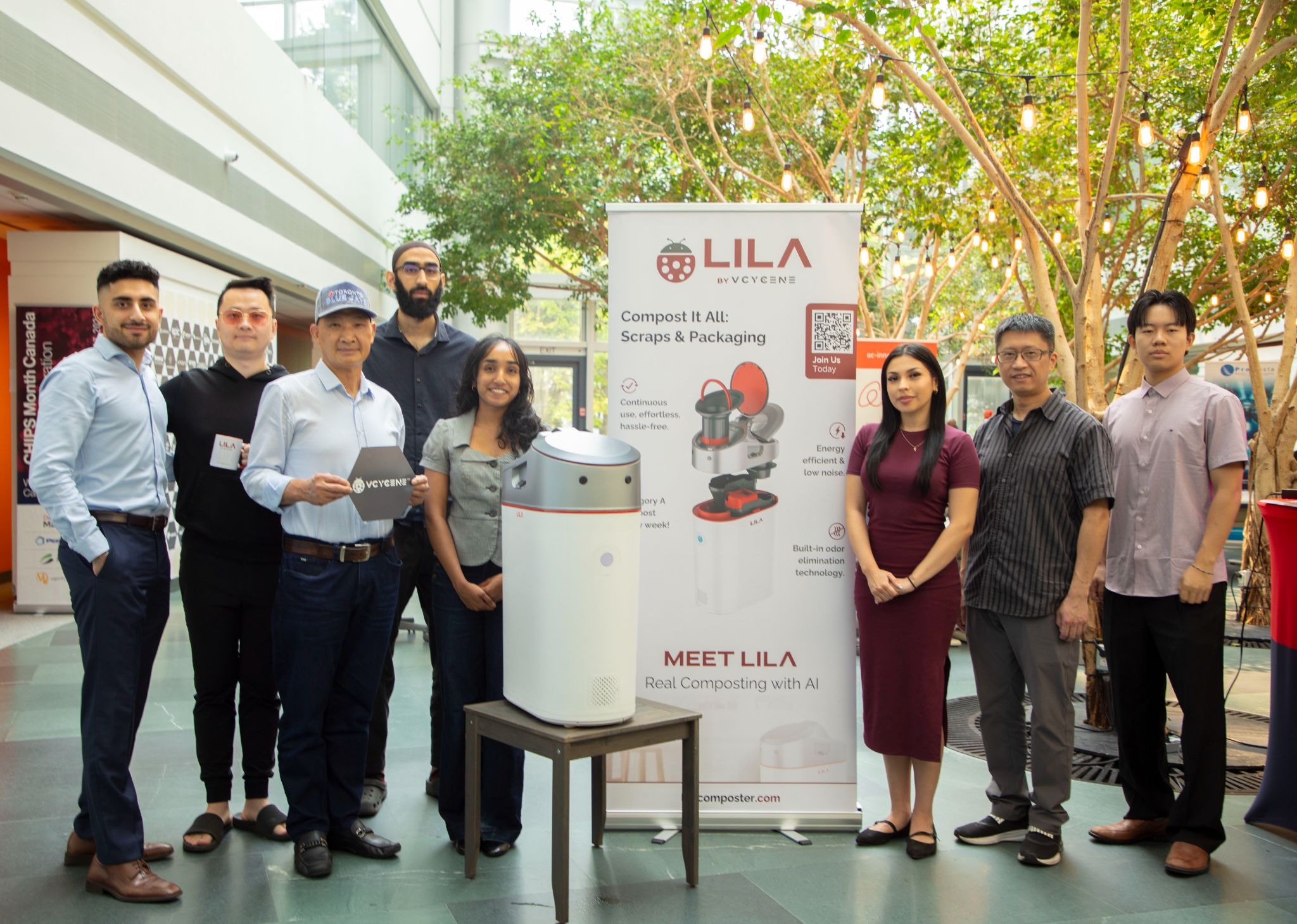
Today's LILA pairs engineered microbes with AI-driven sensors to accelerate aerobic decomposition, monitoring and adjusting the process to turn food scraps into Category A compost in as little as a week. It's designed to work in homes and offices, and its impact scales beyond the kitchen table: municipalities like King Township and the District of Muskoka have partnered with VCycene to bring composting directly into communities where curbside organics programs aren't practical.
Where ventureLAB comes in
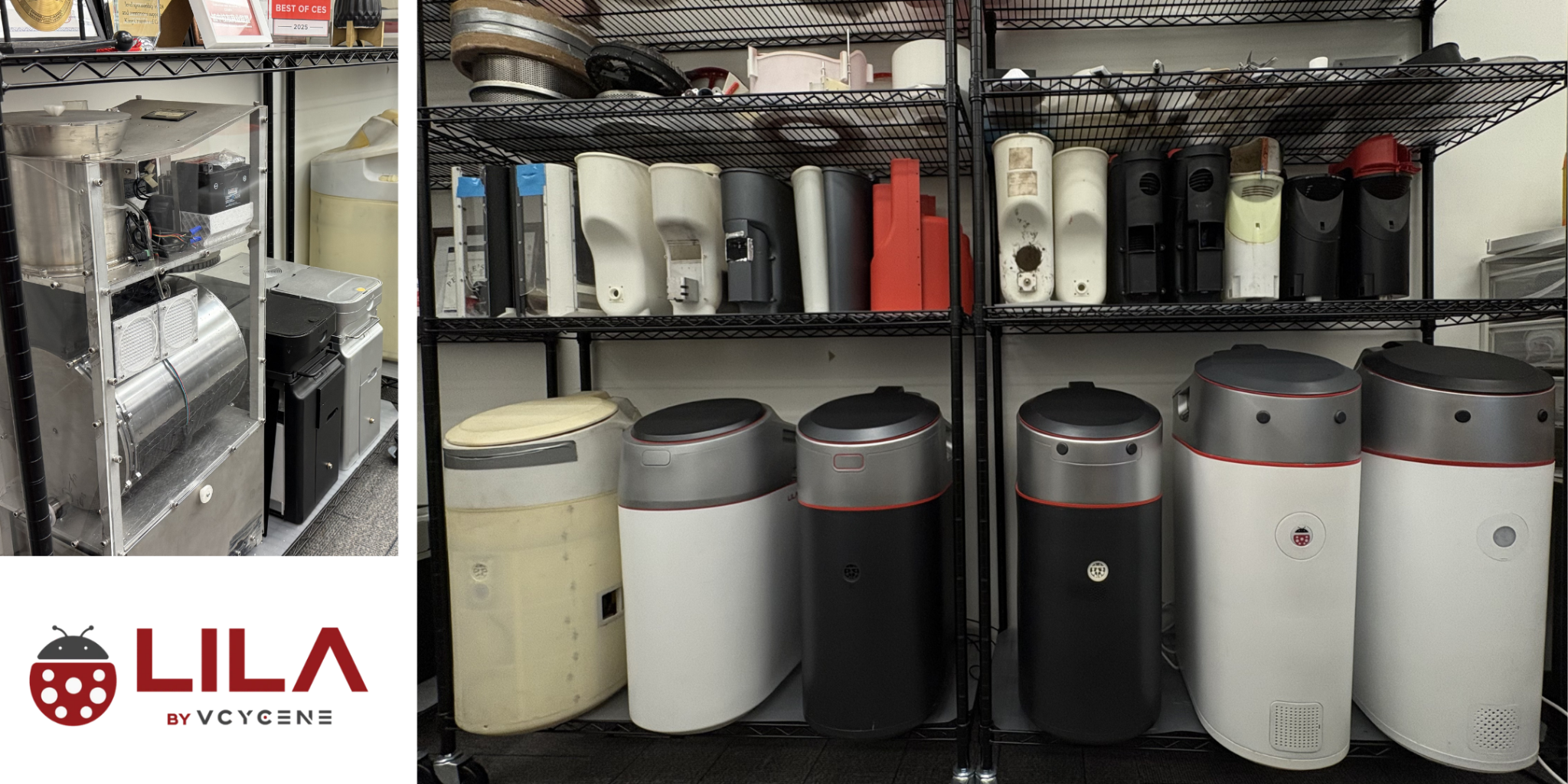
VCycene had already been building for over a year before it joined ventureLAB's Hardware Catalyst Initiative (HCI) in August 2022, Canada's only hardware and semiconductor-focused lab and accelerator, itself marking five years of supporting founders in 2025. That timing matters: ventureLAB didn't hand VCycene its idea. It showed up when the team needed infrastructure and expertise that most early-stage hardtech companies simply can't access on their own, and did so without taking equity in return.
That access included 24/7 use of ventureLAB's specialized Hardware and MedTech Labs, letting the team test and validate LILA's biochemistry and microbial process well beyond what a simple crush-and-dehydrate competitor could claim. That validation work fed directly into certifying LILA's output as an official Class A fertilizer, a regulatory milestone that turned "our compost is good" into a claim VCycene could prove.
ventureLAB's support extended past the lab bench. Huayi Gao has been candid about treating IP strategy as core to the company from day one, and ventureLAB connected the team to programs like ElevateIP and IPON to help navigate the genuinely difficult work of protecting hardware, software, and microbial innovation across multiple jurisdictions at once. For a small team racing to ship product, that kind of structured support changes what's possible.
Where VCycene is now
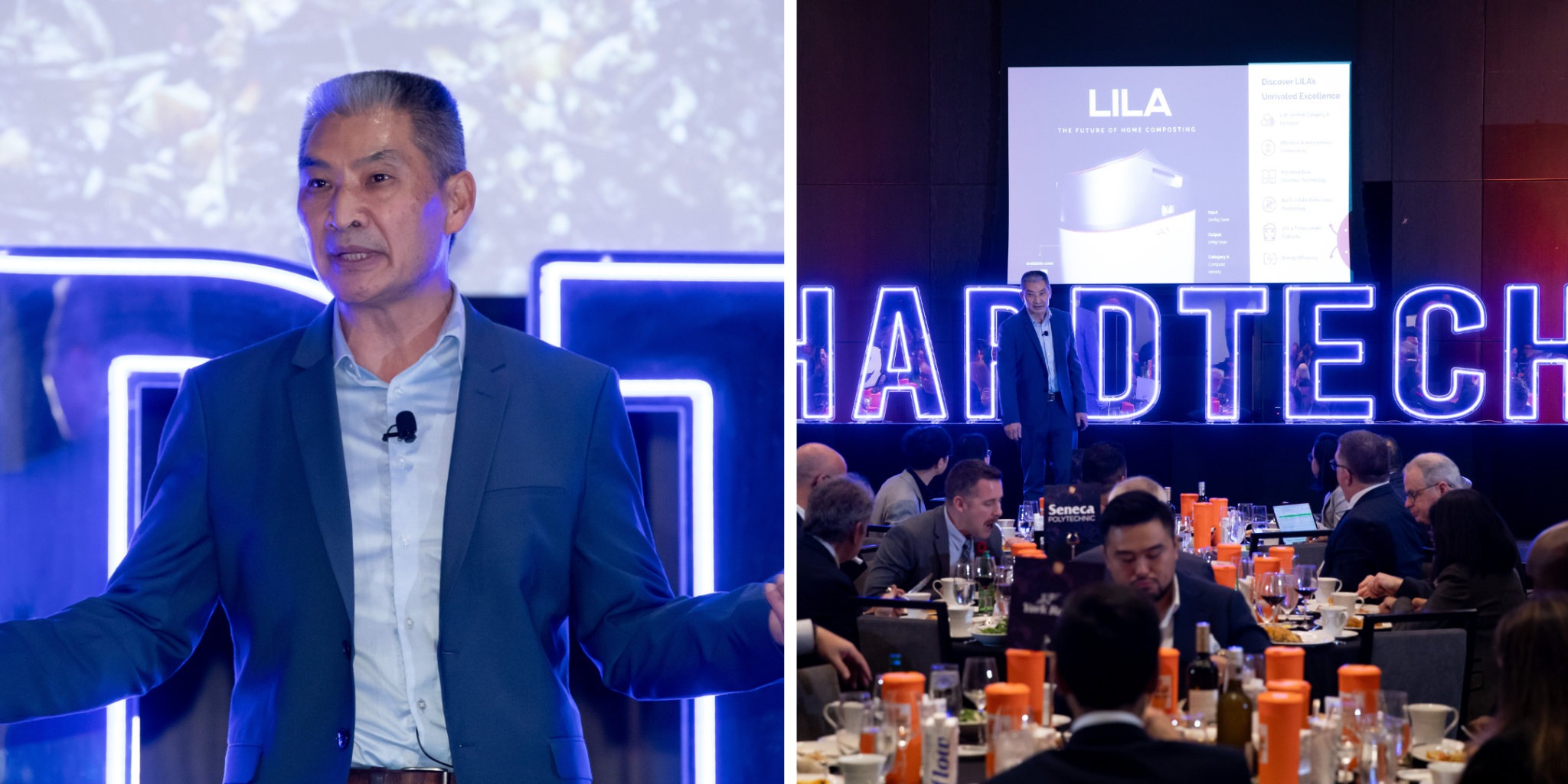
Five years in, the results speak for themselves. LILA earned a "Best of CES 2025" award from House Digest, and USA Today featured the company's milestone journey. VCycene has grown from a Vaughan-based idea into a business with genuine North American recognition, still operating out of ventureLAB's Markham innovation space.
None of that changes what LILA actually does: it takes something ordinary, a bag of food scraps most people throw away without a second thought, and turns it into a small, repeatable act of climate impact. That's the throughline of VCycene's first five years, and it's the model ventureLAB wants for every founder walking through its doors. Build something people can actually use. Give them the infrastructure, validation, and protection to do it right. Then get out of the way and let the impact scale.
About ventureLAB
ventureLAB is a leading global founder community for hardware technology and enterprise software companies in Canada. Located at the heart of Ontario’s innovation corridor in York Region, ventureLAB is part of one of the biggest and most diverse tech communities in Canada. Our initiatives focused on raising capital, talent retention, commercializing technology and IP, and customer acquisition have enabled thousands of companies to create over 6,800 jobs and raise more than $420 million in investment capital. ventureLAB is powering hardtech founders to build and scale globally competitive ventures that advance Canada’s knowledge-based economy.
About VCycene
VCycene is on a mission to revolutionize sustainable living and simplify waste management for a greener world. The company is driven by a deep commitment to empowering individuals to make a positive impact on the environment. With its cutting-edge LILA Composter and patented waste-to-compost system, VCycene simplifies waste management, continuously turning food scraps into high-quality organic compost with minimal energy consumption. Its goal is to inspire and delight customers, seamlessly integrating sustainability into everyday life.


