.png)
Canada's defence sector is entering a generational growth phase. Having hit its 2% NATO spending target ahead of schedule, the federal government has committed to spending an unprecedented 5% of GDP on defence by 2035. This lofty goal is backed by a Defence Industrial Strategy that aims to put defence, economic resilience, and national readiness at the very top of Canada’s priority list.
For Canadian founders and SMEs, this is a massive opportunity. It's also unfamiliar terrain. The defence sector hasn't historically been a focus for mainstream Canadian innovators and investors alike. That’s besides the significant barriers to entry:
- Complex procurement pathways
- Strict compliance requirements
- Serious security clearances
As a new entrant staring down the Canadian Defence sector, it can often feel like building and flying a 747 airliner at the same time…without an instruction manual.
That's why ventureLAB, together with Markham Economic Development and York Region, hosted Defence Ready: Navigating Canada's Supply Chain Opportunities.
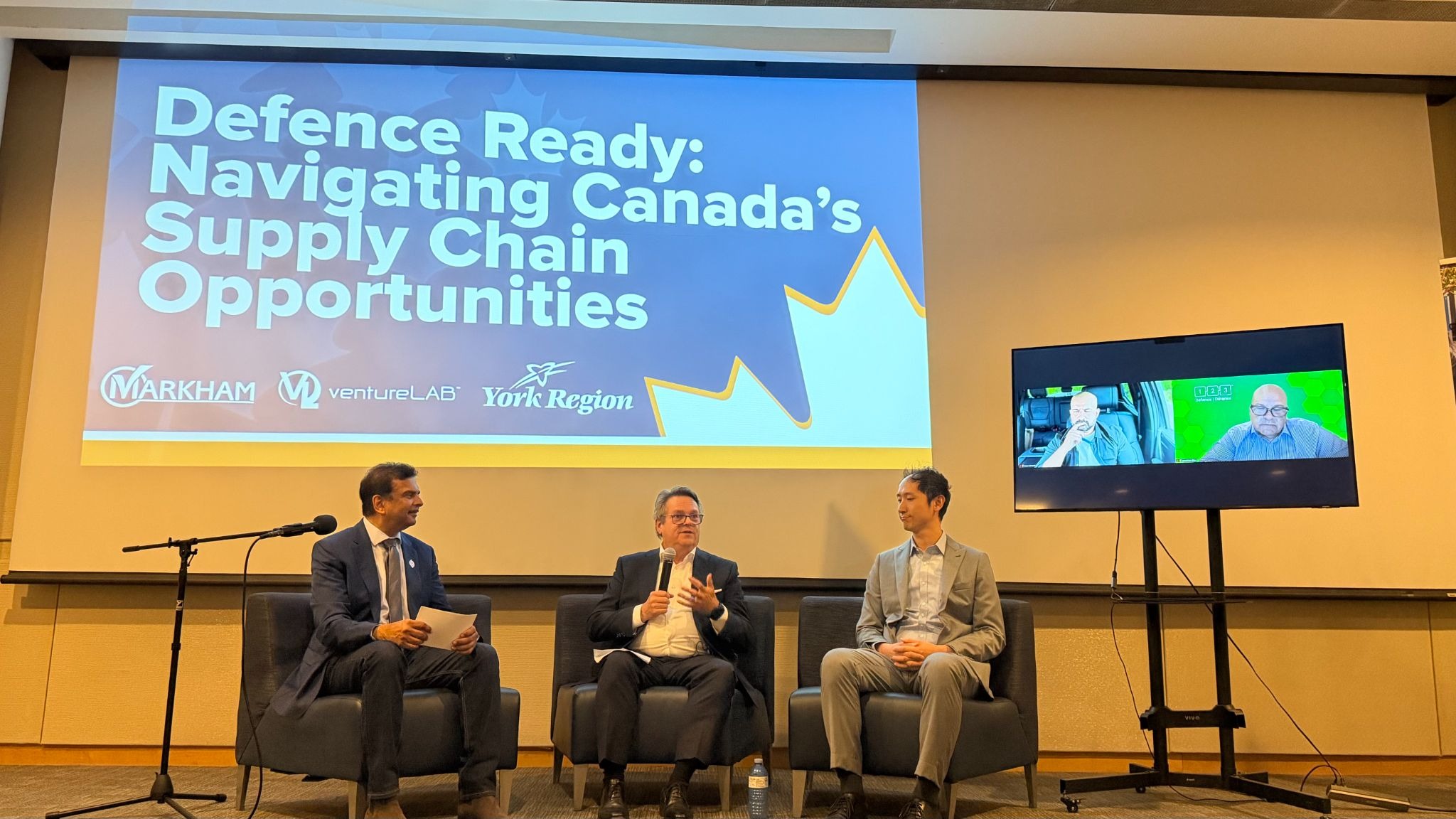
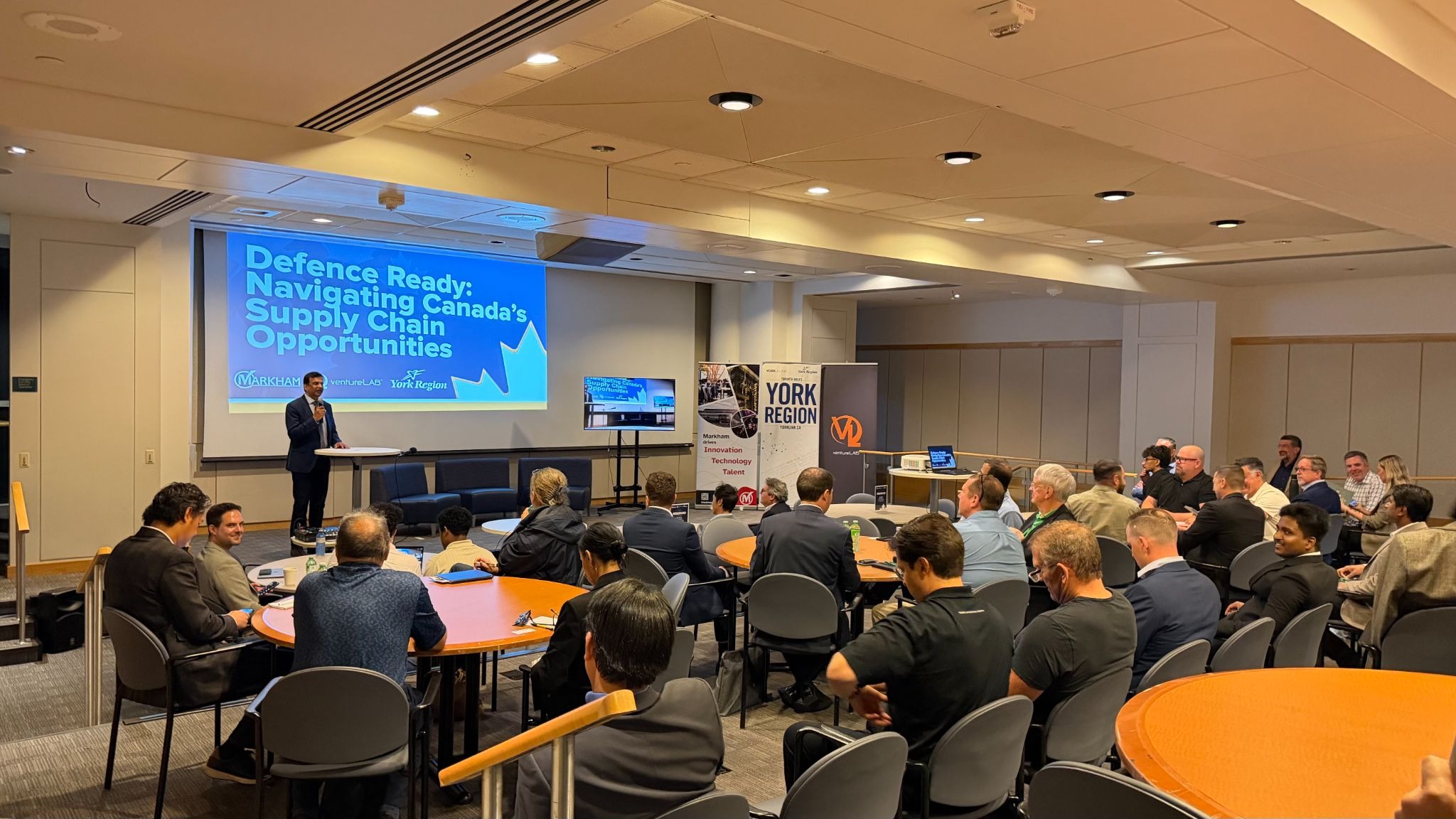
A packed auditorium of 80+ hardware and software SMEs heard a keynote from Jonathan Clow of 123 Defence, joining from Virginia, followed by a candid panel moderated by Avinash Persaud, VP of Hardware Initiatives and HCI, featuring:
- Louis Lambert, CEO of Emergent Solutions
- Derrick Chow, VP of Operations at Nordspace
- Arjun Grewal, CEO of Arctic Training Centre
By the end of the event, it was clear that there are key things founders need to know when entering or navigating Canada's defence sector.
Eligibility comes before everything
The best technology on the planet means nothing if your company isn't eligible to hold a defence contract. That was the central message from keynote speaker Jonathan Clow.
He discussed in detail the three things Canadian SMEs need to prepare before being able to begin engaging with Canada’s defence sector:
- Understand the opportunity
- Understand the requirements
- Build a plan to become defence eligible
The cornerstone is Canada's new Program for Cyber Security Certification (CPCSC). Level 1, basic cyber hygiene and governance, will soon be required just to view federal contracting opportunities. Level 2, needed by any company receiving technical data, takes 9 to 12 months to achieve.
Clow's advice: Don't wait for an RFP to start. Companies that get certified early earn a trust mark that signals they're serious about the ecosystem.
The good news is that if you already hold certifications like ISO 9001 or ISO 27001, you're not starting from zero. Much of that work can be recycled toward CPCSC and increasingly toward US, EU, and NATO standards as export opportunities open up. Most recently, the €150B SAFE program allows Canadian companies to supply up to 80% of an EU defence procurement contract.
Dual-use is the smart path in
For many companies, defence is an evolution. Louis Lambert built Emergent's edge intelligence platform for oil and gas, mining, and utilities first, knowing those environments share the defence industry’s hardest constraints:
- No GPS
- No satellite
- No cloud
"If you build something really good for heavy industry, defence comes knocking at your door," Lambert told the crowd.
Arjun Grewal made the same point from the other direction: Technologies proven in Canada's most challenging environments will work anywhere. Grewal made these comments while dialing in from the side of a highway in Northern Ontario via the Starlink mounted on his truck. You couldn't ask for a better live demo of dual-use tech in action.
His Yukon-based proving ground gives innovators early access to operationally relevant landscapes, including everything from drones and communications to textiles. Grewal's "landscape as a service" model helps SMEs generate the test data that decision-makers and end users need to see.
You don't have to go it alone
Derrick Chow, whose Markham-based employer, Nordspace, recently received $8.3M through DND's "Launch the North" IDEaS challenge to develop its Tundra orbital launch vehicle, emphasized building a supply chain that's 80%+ Canadian content. His weekly habit: meeting three to five new Canadian suppliers, most within a 30-minute drive of the GTA.
The instinct to collaborate instead of isolate ran through the entire discussion. Refreshed Industrial and Technological Benefits (ITB) rules now encourage defence primes to make multi-year commitments to Canadian SMEs, with multipliers that reward R&D partnerships and cybersecurity certification. As Clow put it, the companies most open to collaboration are the ones taking the biggest steps forward.
Getting defence ready starts here
The throughline from every speaker: the divide between great technology and defence adoption is real but bridgeable.
There are three key factors Canadian SMEs need to get their products adopted by the defence industry:
- The right guidance
- The right certifications
- The right connections
That's where ventureLAB comes in. As Canada's hardware catalyst, we support 90+ companies building the advanced, dual-use technologies on which Canada is banking its future readiness, and we work as a trusted connector between innovators, government, and the defence ecosystem.
Whether you're exploring defence opportunities for the first time or scaling your presence in the sector, ventureLAB is where Canadian innovators come to get defence ready.
Connect with our speakers to start the conversation:
- Avinash Persaud (ventureLAB, Moderator): apersaud@venturelab.ca
- Jonathan Clow (123 Defence™): jonathan.clow@123cyber.ca
- Arjun Grewal (Arctic Training Centre): arjun@arctictrainingcentre.com
- Louis Lambert (Emergent Solutions Inc.): llambert@emergent-sol.com
- Derrick Chow (NordSpace): derrick@nordspace.com
About ventureLAB
ventureLAB is a leading global founder community for hardware technology and enterprise software companies in Canada. Located at the heart of Ontario’s innovation corridor in York Region, ventureLAB is part of one of the biggest and most diverse tech communities in Canada. Our initiatives focused on raising capital, talent retention, commercializing technology and IP, and customer acquisition have enabled thousands of companies to create over 6,800 jobs and raise more than $420 million in investment capital. ventureLAB is powering hardtech founders to build and scale globally competitive ventures that advance Canada’s knowledge-based economy.


