
Ten years into her career as a family physician, Dr. Jennifer Johnston decided it was time to build a better contraceptive option. Across her 14 years in practice, she repeatedly saw patients run out of methods that fit their lives, from the systemic side effects of hormonal options to the insertion drawbacks of IUDs and the real-world limitations of condoms. As someone who personally avoided hormonal birth control for health reasons, Jennifer experienced this gap as both a doctor and a patient.

That gap became Elle, MD Biotechnologies, a Nova Scotia startup and graduate of ventureLAB’s Investment Readiness Program within the Capital Services portfolio.". The New Minas, Nova Scotia company has raised $1.1 million CAD in all-equity pre-seed financing to advance clinical testing of its flagship non-hormonal, copper-based contraceptive ring. Elle, MD's total funding, including non-dilutive grants, now sits at $2.9 million, positioning the company for its first in-human clinical trial at The Ottawa Hospital.
Building a strong product got Elle, MD this far. Getting investment ready is what turned that product into a fundable company.
A Gap On Both Sides
Working with a university-clinic patient population, Jennifer saw the same pattern repeatedly: patients turning down copper IUDs over heavy bleeding concerns, and condoms falling short because typical-use effectiveness (around 86%) depends on consistent use. Hormonal contraceptives remained an effective option for many, but for others, unwanted side effects or underlying medical conditions placed hormones out of reach.
She took matters into her own hands with a simple mantra: if someone else could build a vaginal medical device, why not her?
Jennifer's innovative spark was transforming the product from its initial conception as a diaphragm into a ring with a copper component, not hormones, to prevent fertilization. This innovation set their copper ring apart from other birth control devices by simplifying the process:
- No daily action or routine pill
- No partner compliance required
- No clinical insertion procedure required

Early development was scrappy. Engineer contacts led Jennifer to the Nova Scotia Innovation Hub, which connected her to mentors, early funding, and the Dalhousie ecosystem for prototyping. In an early animal study, sheep given the ring stayed pregnancy-free while an untreated control group conceived. It was a small study, but the result was statistically significant, and Jennifer points to it as a turning point in how investors received the company.
Raising Capital Wasn't Instant
The financing started slowly. It picked up with that animal study data, consistent conference visibility, and eventually a U.S.-based investor who did her own due diligence and surveyed target patients herself before assembling an investor syndicate to back the opportunity through a single shared investment vehicle (SPV).
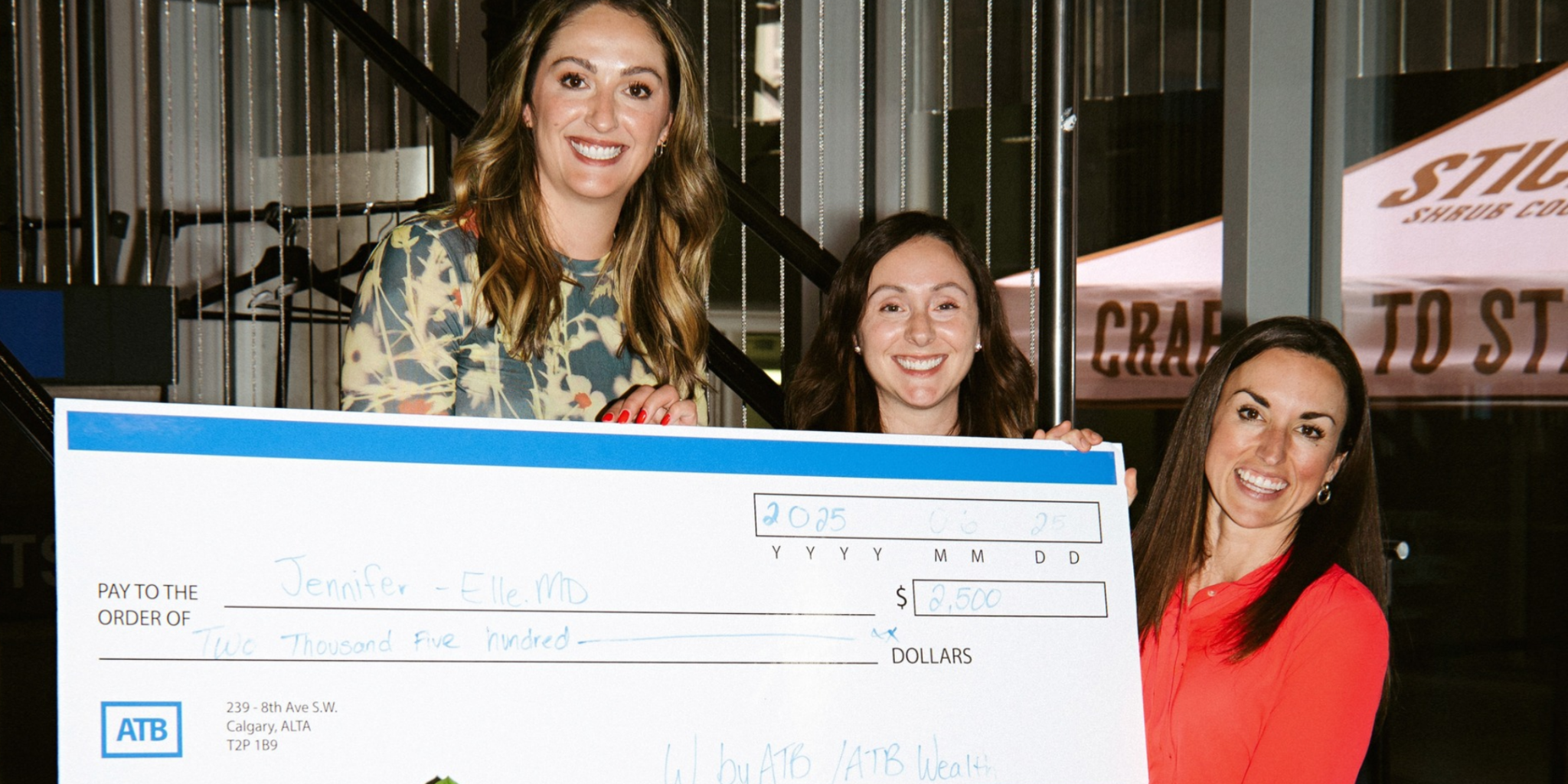
Jennifer points to something specific about why the early pitching was hard: it depends on whether an investor has felt the problem personally. If someone has dealt with a similar health issue, or knows someone who has, the pitch lands. If they haven't, it can feel like talking to a wall, and some investors asked outright why another contraceptive was even needed.
Finding investors who actually connected with the problem, not just the market size, is what moved the round forward.
Getting Investment Ready With ventureLAB
A great product doesn't raise capital on its own. Knowing your numbers, protecting your terms, and finding the right investors does that, and that's where many technical founders get stuck.
Jennifer connected with ventureLAB through Danielle Graham, who introduced her to the ecosystem after judging one of her pitch competitions. From there, she worked with Gaurav Bansal, a former ventureLAB Capital Services advisor, throughout her raise.
Jennifer and Gaurav worked together across nearly every stage of the fundraising journey, from refining the investment story and pitch materials to financial and cap-table planning, valuation, investor targeting, outreach strategy, and ultimately financing terms. Keeping all of these pieces connected mattered. The amount a company raises, the valuation it can defend, and the investors worth targeting all trace back to the clinical, regulatory, and commercial milestones that the capital is meant to unlock.
They also spent significant time identifying investors with relevant medical-device experience, rather than simply building a large list. The goal was to help Jennifer walk into the market with a stronger investment case, sharper clarity on who to target, and the confidence to evaluate and negotiate capital on terms that set Elle, MD up for its next stage.
The impact was concrete:
- Pitch positioning. Gaurav repeatedly reviewed Elle, MD's investor materials, helping sharpen the pitch deck and teaser and turn clinical and technical progress into a clearer investment case.
- Investor targeting. Instead of casting a wide net, Gaurav helped research MedTech financings, filter through hundreds of transactions, and build a focused list of investors matched to Elle, MD's sector, stage, and track record.
- Fundraising strategy. Together, they mapped out how to approach the Canadian and U.S. markets, prioritize investors, and structure outreach around Elle, MD's milestones and capital needs.
- Valuation and cap-table planning. Comparable financings and cap-table scenarios gave Jennifer a clearer read on valuation, ownership impact, future rounds, and how much dilution was reasonable.
- Term-sheet negotiation. Gaurav helped Jennifer evaluate financing terms from a founder's perspective, flagging provisions worth pushing back on rather than settling just to get the round closed.
- Financial model and data-room readiness. Reviewing the financial plan and data room ensured the numbers, the financing narrative, and the diligence materials all told the same story.
None of this changed the product. It changed whether Jennifer could sell it on her own terms. That's the gap Capital Services is built to close.
What Comes Next
The funding supports Elle, MD's first in-human safety trial, pending Health Canada approval. Because the contraceptive ring is classified as a device in Canada and a drug elsewhere, Health Canada represents the first regulatory milestone. A successful trial would de-risk the company ahead of a planned seed round, with Jennifer targeting safety and surrogate efficacy data by the end of 2027. Longer term, Elle, MD is exploring a shift from silicone to EVA (the material used in NuvaRing) to drive down unit costs for low- and middle-income markets.
Jennifer's Advice to Other Founders
- Chase non-dilutive funding first, before touching equity.
- Get a realistic read on valuation, from multiple sources, before setting a raise target.
- Start local before going wider.
- Remember that an unrealistic valuation is like pricing a house no one in the market can actually afford.
About Elle, MD
Elle, MD is a female-founded biotechnology company reimagining women's reproductive health. Based in Nova Scotia, Canada, the company was founded by Dr. Jennifer Johnston, a family physician with over a decade of practice in the province. Elle, MD is developing a once-monthly, non-hormonal contraceptive ring, and has received more than $2.9 million toward its first in-human clinical trial at The Ottawa Hospital. Elle, MD is working to give women greater autonomy over their reproductive health, with plans to expand its core technology into the first patient-controlled, dual-indication contraceptive device of its kind.
About ventureLAB
ventureLAB is a leading global founder community for hardware technology and deep tech companies in Canada. Located at the heart of Ontario's innovation corridor in York Region, ventureLAB is part of one of the biggest and most diverse tech communities in the country. Its initiatives in capital raising, talent retention, technology and IP commercialization, and customer acquisition have helped thousands of companies create over 7,800 jobs and raise more than $530 million in investment capital. ventureLAB powers hardtech founders to build and scale globally competitive ventures that advance Canada's knowledge-based economy.


